.png)
Celebrating CITRO at 50:
Prepared, Present and Built on Community
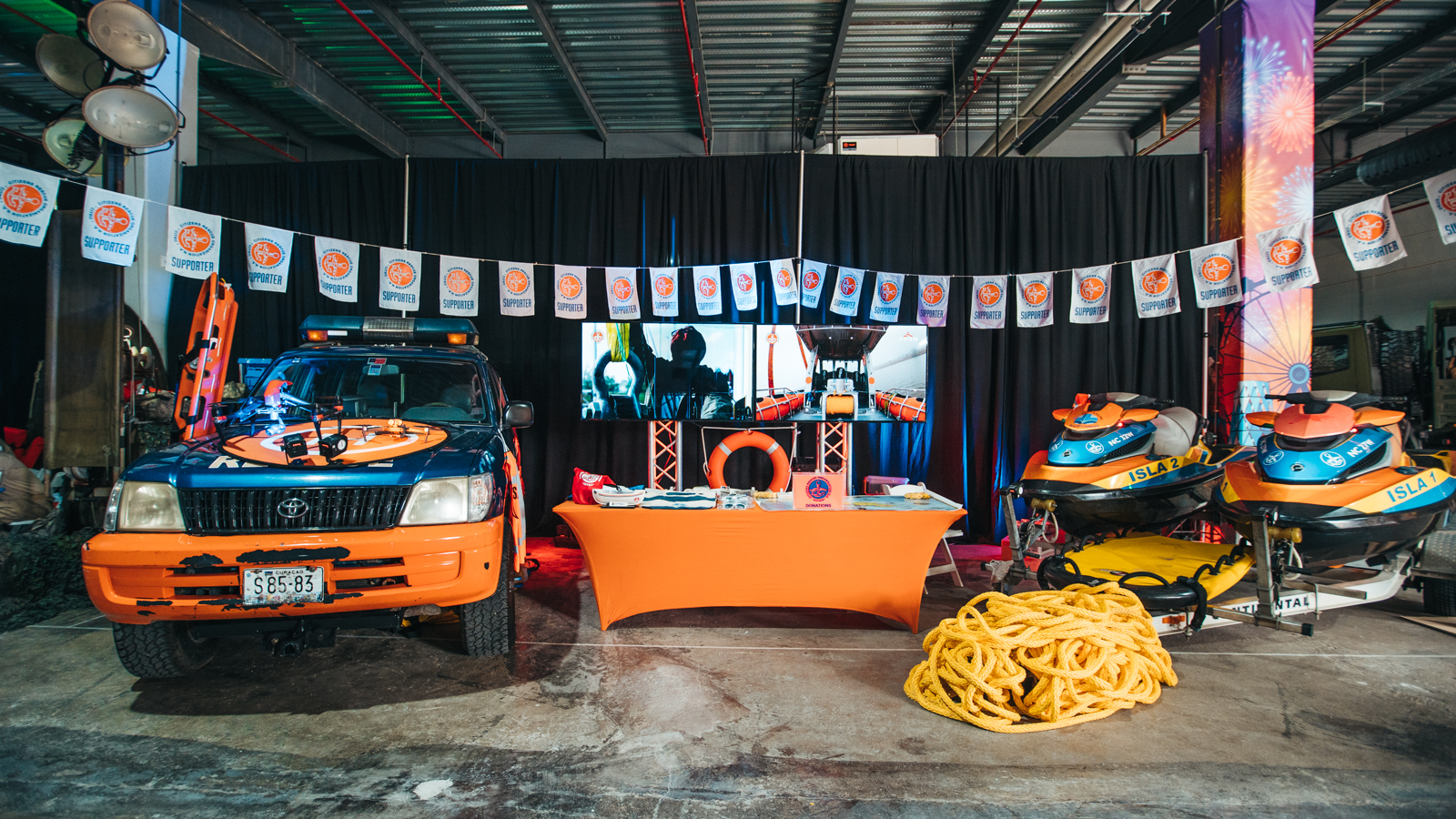
For 50 years, CITRO has been a constant presence along Curaçao’s coastline, a volunteer-driven organization responding to emergencies at sea. Behind every rescue is not only willingness, but preparation: trained crews, coordinated systems, and equipment maintained to the highest standard.
CITRO operates with discipline, structure and a clear sense of responsibility, even under pressure.
For Gareth Weber, now a Skipper and board member, the path to CITRO started early. “I joined the Zeeverkenners (sea scouts) when I was eight,” he explains. “At the time, it was almost a given that you would eventually move into CITRO.” Today, he has been with the organization for 16 years and is part of one of the last generations to follow that path.
Johnny Imperator’s story is different. A former bank manager, he is now also a Skipper, he joined after taking part in a rescue firsthand. “There was an accident with a speedboat. CITRO went to help and I assisted them,” he recalls. “A year later Dick Braakman called me and asked if I wanted to join. I didn’t hesitate, because I knew how valuable the work is.” That was 30 years ago.
Liesbeth “Beppie” Luis Calister, paramedical volunteer, joined through an information day, together with two colleagues from the ambulance service. “They needed people for the medical team,” she says. “The others left, but I'm still with CITRO.” With 32 years as a first responder, she brings extensive paramedical experience to CITRO’s operations and a clear perspective: “It’s important to me that women are more represented in work like this.”
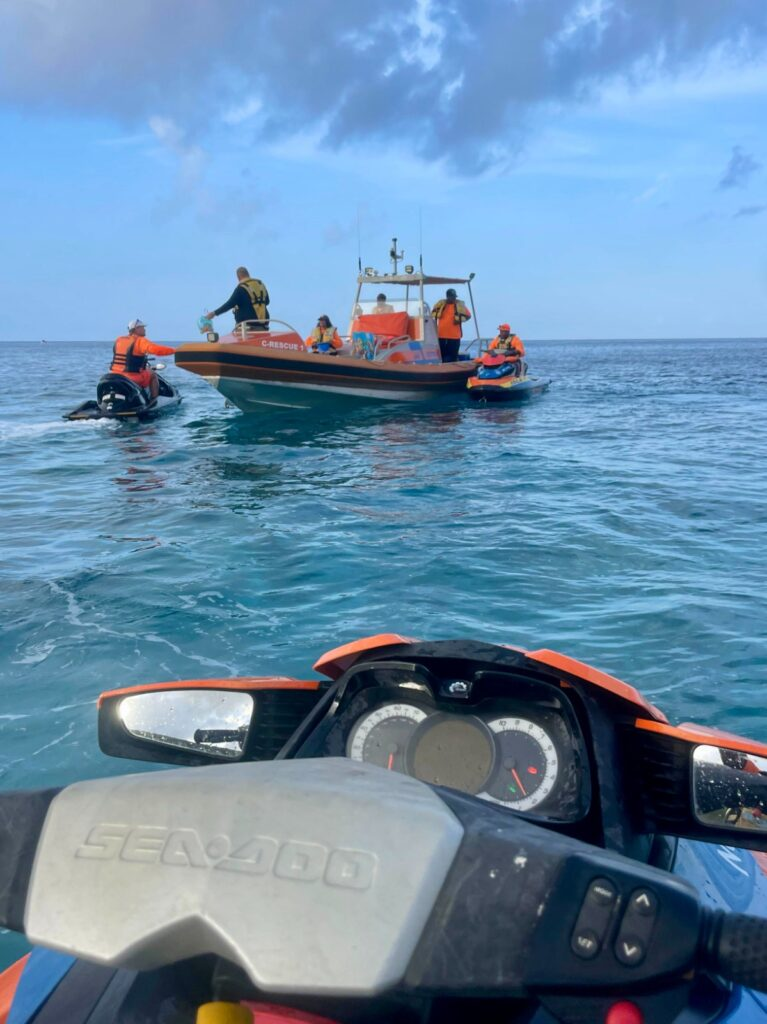
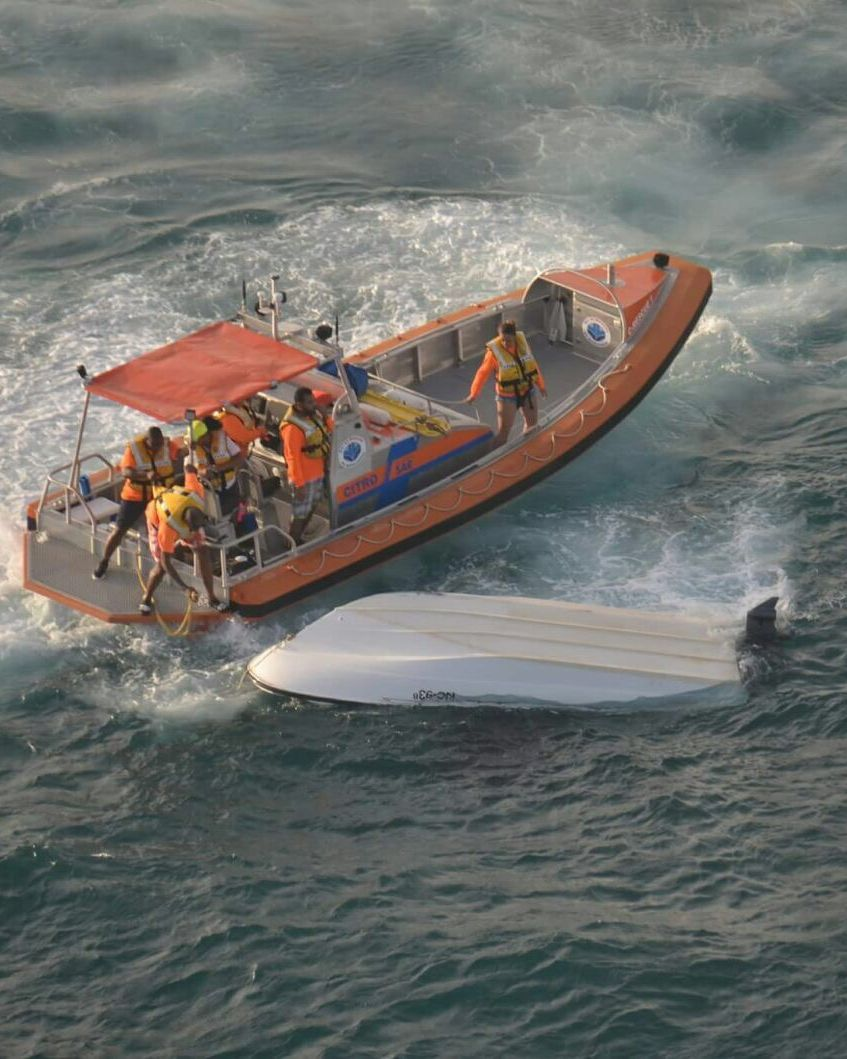
When a report comes in, it is received by a coordinator and shared with volunteers through a WhatsApp group. The first available responders mobilize immediately. A crew heads out, while others remain at the boathouse to coordinate communication between the Coast Guard and the vessel. “Actions have become bigger than before,” Gareth explains. “Rescues used to be closer to shore, with smaller boats. Now missions can take up to eight hours.”
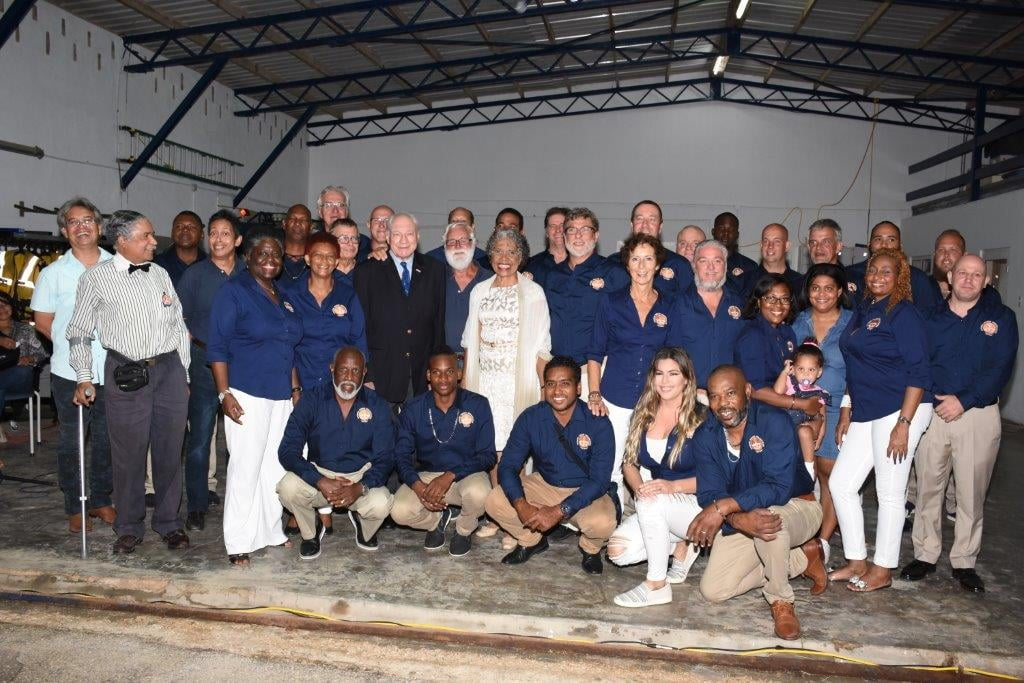
CITRO currently has around 40–45 volunteers, with about 25 actively participating in rescue actions at sea. Others support in different roles, from medical teams and technical work to administration and communications. Beyond that, their strength lies in its structure. There are medical teams onshore and onboard, operational crews for rescues and a shore team supporting logistics such as refueling, maintenance and preparation. A support team handles administration, fundraising and outreach.
.png)
The organization runs entirely on volunteers and donations, supported by local companies, members of CMAR among them, across the maritime sector. Through its Botenfonds, CITRO builds reserves for larger investments and unexpected costs. This collective support ensures that equipment remains in top condition and that volunteers can operate safely and effectively. Volunteers must meet annual training requirements. At the same time, the organization continues to look for additional support, both in funding and in people.
When asked about their most memorable rescue, the answer is unanimous:
“All missions are special.”
But some leave a deeper mark. “The missions I dislike the most are when we have to bring in a corpse,” Beppie says. The others nod.
“Those are heavy missions,” Gareth adds. “Especially when it’s a child.” To manage that weight, CITRO is deliberate in how crews are formed, often combining experienced volunteers with newer ones. After difficult missions, they debrief extensively. Support also comes from within the organization itself. “We’ve learned from the past,” Gareth explains. “We lost volunteers because of the emotional toll. Now we make sure there’s space to process what we’ve seen.”
Johnny still remembers one mission that changed him. “We lost a fellow volunteer, Robert Willems,” he says. “We’re trained for rough seas, but we lost him during a land rescue with flooding. I had nightmares after that. I just couldn’t believe it.”
.png)
Not every story is heavy. Gareth recalls a rescue where a woman had lost part of her finger at sea. “We brought her in with her daughter,” he says. “After we had transferred them to the ambulance crew, the husband called. He had found the missing piece. We went back out, retrieved it, and got it to the hospital just in time.”
Years later, a teenage girl ran up to him and hugged him tightly. “I didn’t recognize her at first. Then her mother showed me her finger and I remembered everything.”
Looking Ahead
For the future, the vision is clear.
More awareness. Regular donations. Stronger collaboration.
“With more boats and more people on the water, the number of rescues is increasing,” Gareth says. Johnny adds, “we hope people become more aware of safety.”
There are also discussions about expanding medical support, including a potential first aid post on Klein Curaçao.
All volunteers agree:
“We hope to grow our volunteer base.”
And not only for operations. “People often think you need to be on a boat or in the medical field,” Gareth says. “But we need all kinds of support, administrative, technical and communications. A lot can be done in your own time.”
CITRO began with a simple act: a citizen taking their own boat out to rescue people in need. From that moment, a small group formed at Marine Base Suffisant, eventually growing into the organization it is today. Over the years, CITRO has developed into a structured, multi-disciplinary volunteer network, supported by the community and maritime partners.
In May, CITRO marks its 50th anniversary, with increased visibility, storytelling and events to highlight its work and history. What began 50 years ago with a citizen who chose to act has grown into an organization of trained volunteers who dedicate their time and expertise to assist others at sea. During the interview, one phrase returned several times: “vrijwillig, maar niet vrijblijvend.” Voluntary, but never without commitment.
It reflects how CITRO operates, not driven by obligation, but by a shared responsibility to be ready when it matters.
---
CITRO is an honorary member of CMAR.
---
Useful links:
- Commit to CITRO as a donor or sponsor.
Make a donation today!

Noteworthy
China detains Panama-flagged vessels amid port control tensions
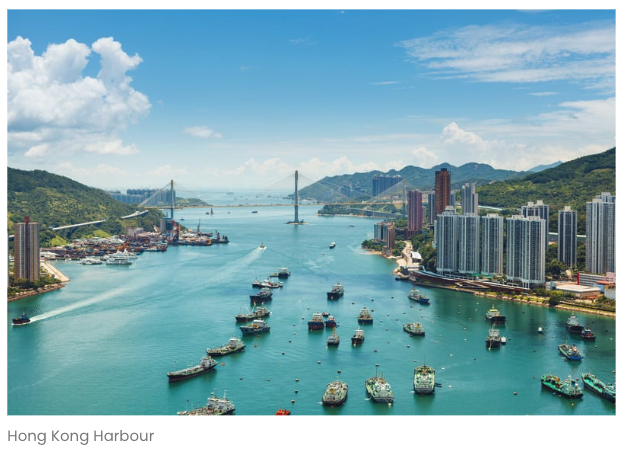
Recent reports indicate that authorities in China have detained multiple Panama-flagged vessels, highlighting increasing geopolitical tension around port control and shipping operations. The situation reflects broader pressure linked to strategic infrastructure, including ports with foreign ownership or influence.
The detentions raise concerns within the maritime sector, as Panama remains the world’s largest ship registry and is widely used by operators globally, including in the Caribbean. Developments like these illustrate how geopolitical dynamics can directly impact vessel movement, port access and regulatory scrutiny.
For maritime stakeholders, this serves as a reminder of the growing intersection between global politics and day-to-day operations at sea. While not directly related, developments in other regions, such as ongoing tensions around the Strait of Hormuz, further illustrate how geopolitical dynamics are increasingly influencing maritime operations worldwide.
Updates from the Caribbean Shipping Association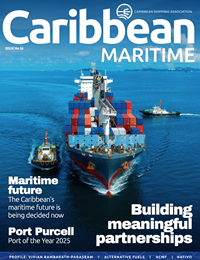
The Caribbean Shipping Association (CSA) has published their newsletter, featuring an article about Curaçao's plans for Buskabaai, as well as a range of in-depth articles, including a profile of the IMO’s Regional Coordinator, Vivian Rambarath-Parasram, a look at CSA Port of theYear 2025, Port Purcell, insights from Nativo CEO Martin Medina, coverage of the newly formed Saint Lucia Chamber of Shipping and a Caribbean guide to alternative marinefuels. Read it here!
.png?mw=303&mh=380) The 24th Caribbean Shipping Executives’ Conference will be proudly hosted in Curaçao by CSA and the Curaçao Ports Authority (CPA) on May 17–19, 2026, at the elegant Curaçao Marriott Beach Resort.
The 24th Caribbean Shipping Executives’ Conference will be proudly hosted in Curaçao by CSA and the Curaçao Ports Authority (CPA) on May 17–19, 2026, at the elegant Curaçao Marriott Beach Resort.
Over two dynamic days, participants will engage in insightful discussions, exchange forward-thinking ideas and strengthen strategic connections that shape the future of the Caribbean maritime industry.
The conference serves as a vital platform for networking, collaboration and knowledge sharing.
Register for the conference today!
What to watch: Webinar on Comprehensive Risk Management and Port Resilience
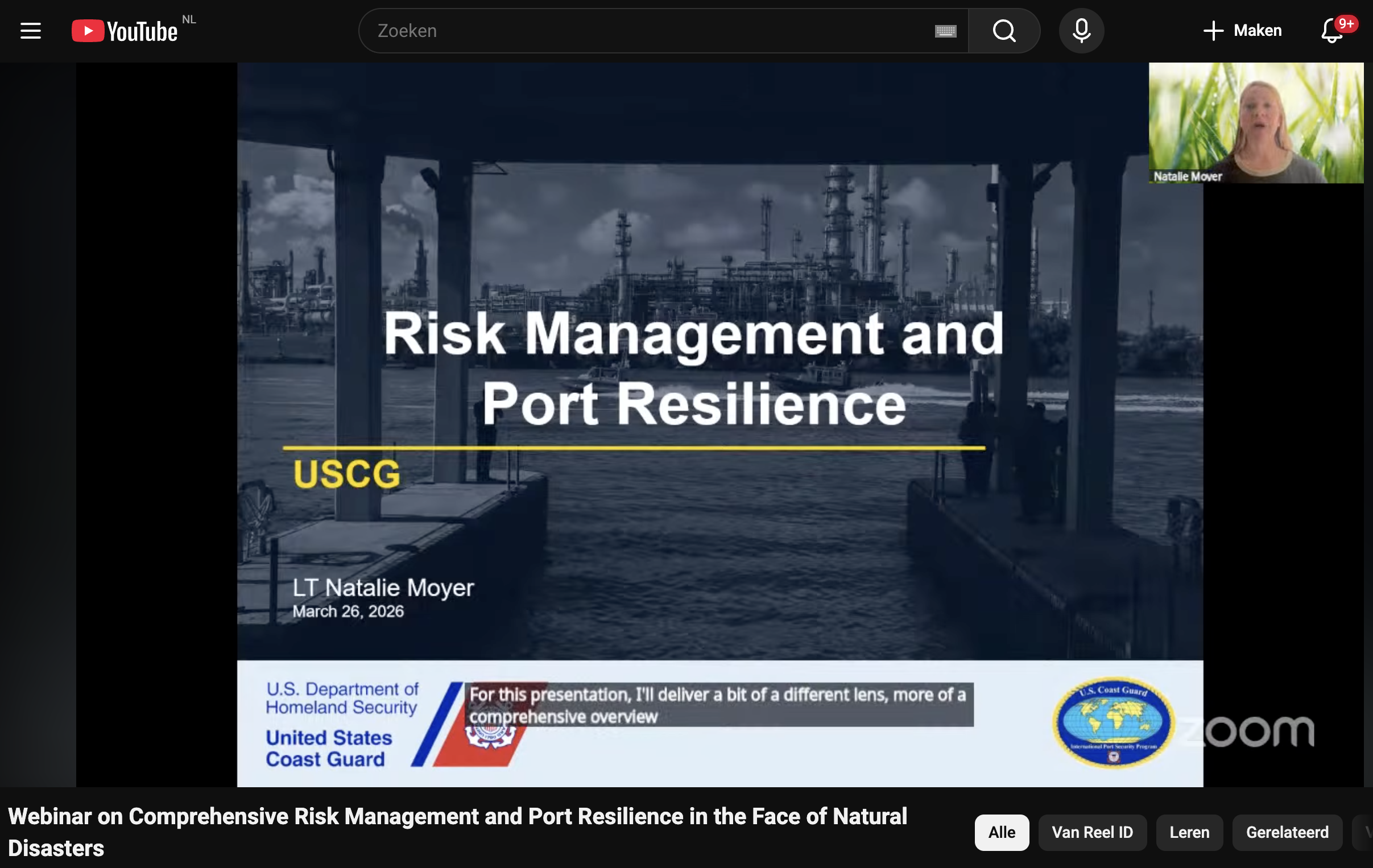
This webinar, organized by the Secretariat of the Inter-American Committee on Ports (CIP) of the Organization of American States (OAS), explores comprehensive risk management and port resilience strategies in the face of increasingly severe natural disasters. Bringing together perspectives from the United States Coast Guard (USCG), Tropical Shipping and the Global Support and Development (GSD), the webinar examines how ports can better anticipate, prepare for, respond to and recover from extreme weather events. Speakers will discuss real-world operational challenges, regional coordination and practical solutions for strengthening port infrastructure and continuity. The webinar highlights actionable lessons and the importance of collaboration in building resilient ports and supply chains.
Click the image to start the webinar.